Your Google Business Profile (GBP) is often the first thing a person in crisis sees when searching for help. For addiction treatment and mental health centers, appearing in Google’s local map pack can be the difference between a phone call and a missed connection. As Google continues to refine how it ranks local results, the strategies that worked a year ago are no longer enough. Treatment centers that invest in the right GBP ranking strategies now will earn more visibility, more calls, and more admissions in 2026.
Quick Summary
Google now cross-references your GBP with your website content, reviews, and behavioral signals like direction requests and calls to determine local rankings. For addiction treatment and mental health centers, ranking in the local map pack requires exact alignment between your GBP service listings (PHP, IOP, MAT, insurance providers) and your website, a steady flow of authentic reviews with thoughtful responses, and real engagement signals from prospective patients. Expect temporary ranking drops after major profile updates, but plan optimizations in coordinated batches and allow two to four weeks for stabilization.
Key Takeaways
- Match every GBP service description, insurance listing, and NAP detail exactly with your website content and structured data
- Increase direction requests by embedding Google Maps links in your admissions workflow, referral communications, and intake follow-ups
- Build review quality through discharge and alumni outreach, respond to every review (positive and negative) promptly, and monitor third-party platforms like SAMHSA and Psychology Today
- Batch your GBP optimizations and time them during lower-volume admissions periods to minimize the impact of temporary ranking fluctuations
- Follow a quarterly action plan: audit in Q1, push content and engagement in Q2, analyze competitors in Q3, optimize and plan in Q4
Why This Matters
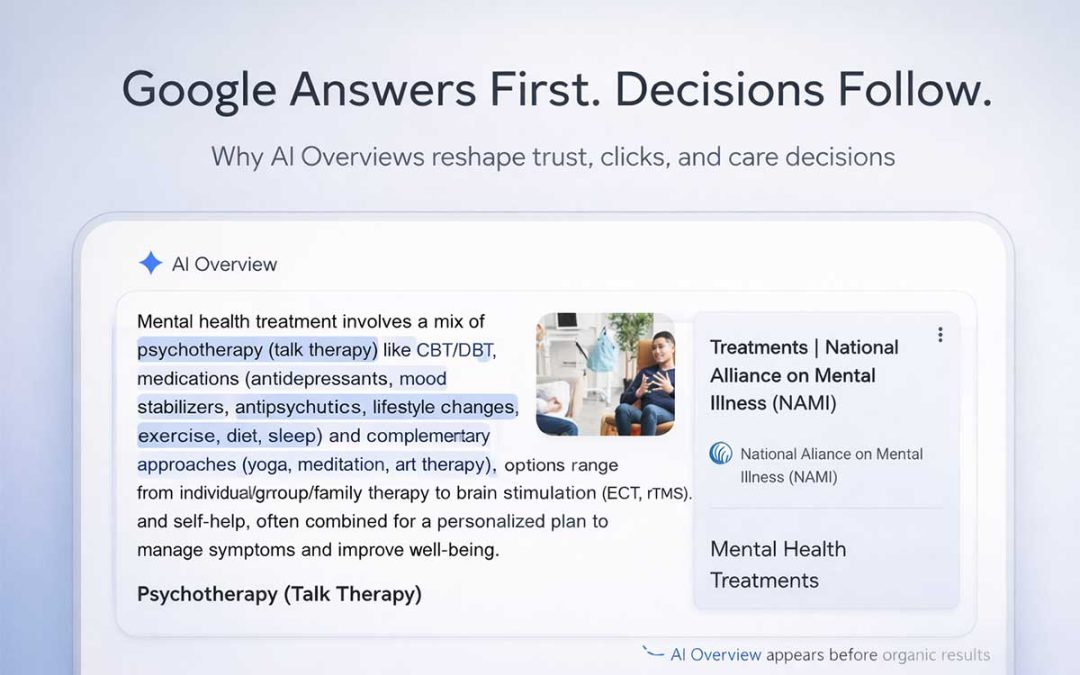
Local search is the primary channel through which people find treatment. According to Google’s own data, “near me” searches for health-related services have grown consistently year over year, and mobile devices now account for the vast majority of those searches. When someone types “drug rehab near me” or “mental health treatment center,” Google Maps results dominate the top of the page, often above traditional organic listings. If your center doesn’t appear in that local three-pack, you are invisible at the moment of highest intent.
What makes local search uniquely important for the behavioral health space is the decision timeline. Research consistently shows that individuals and families seeking addiction treatment or mental health services typically move from search to contact within 24 to 72 hours. This is not a weeks-long consideration cycle like choosing a dentist or a financial advisor. People search during moments of urgency, often late at night or on weekends, and they call the first center that looks credible and accessible. Your GBP listing is your front door during those critical hours.
The competitive landscape makes this even more pressing. In most metro areas, dozens of treatment centers compete for the same local search real estate. Centers running effective addiction treatment marketing campaigns understand that paid ads alone cannot sustain long-term admissions growth. Organic local visibility through GBP provides a durable, cost-effective channel that compounds over time.
How GBP Rankings Are Changing for Behavioral Health Providers
Google’s local ranking algorithm has always relied on three core pillars: relevance, distance, and prominence. What has changed in 2026 is how Google evaluates each of these factors, particularly for healthcare providers.
On the relevance front, Google now looks well beyond your GBP category selection and business description. It cross-references the content on your website, your service descriptions within GBP, and even patient reviews to determine how closely your profile matches a given search query. For treatment centers, this means that vague descriptions like “we treat addiction” carry far less weight than specific service listings that mention PHP, IOP, MAT, dual diagnosis, or detox. Google wants granularity because searchers want granularity.
Prominence is where the biggest shifts are happening. Google increasingly factors in behavioral signals: how often people request directions to your location, how frequently they call directly from your listing, and how they interact with your profile (viewing photos, reading reviews, clicking through to your website). These engagement signals tell Google that real people find your listing useful, which reinforces your ranking position. For behavioral health centers specifically, Google’s review quality analysis has become more sophisticated. Detailed, authentic patient reviews that mention specific programs or staff strengthen your prominence score, while patterns of low-quality or obviously solicited reviews can suppress visibility.
Treatment centers also face unique scrutiny under Google’s YMYL (Your Money or Your Life) guidelines. Google evaluates E-E-A-T signals (Experience, Expertise, Authoritativeness, Trustworthiness) across your entire digital presence, including your GBP, not just your website. Centers that demonstrate clinical credibility, transparent information, and consistent NAP (Name, Address, Phone) data across the web are rewarded with stronger local rankings.
GBP Strategies That Will Boost Your Rankings in 2026
1. Align Your GBP With Your Website
Consistency between your Google Business Profile and your website is no longer a best practice; it is a ranking requirement. Google actively compares the information on your GBP (services, descriptions, categories, hours) with what it finds on your website. When there is a mismatch, it erodes Google’s confidence in your listing and can suppress your rankings.
Start with your service descriptions. If your GBP lists “substance abuse treatment” but your website uses “addiction treatment” and “drug rehabilitation,” you are sending mixed signals. Audit both your GBP and your website to ensure they use the same terminology for every program you offer. This includes specific treatment modalities (cognitive behavioral therapy, EMDR, medication-assisted treatment), levels of care (residential, PHP, IOP, outpatient), and populations served (adults, adolescents, veterans, first responders). Match these terms one-to-one across both platforms.
Beyond service language, align your insurance and admissions information. If your website lists accepted insurance providers, those same insurers should appear in your GBP services or description. Families searching for treatment often filter by insurance, and Google understands these queries. A GBP that mentions “accepts BlueCross BlueShield, Aetna, Cigna, and most major insurance plans” alongside a website page that details each insurer creates a strong consistency signal. Also verify that your business hours, phone numbers, and address match exactly between your GBP and your website footer, contact page, and any structured data markup. Even small discrepancies (like “Suite 200” versus “#200”) can weaken your local ranking. An effective SEO for addiction treatment strategy ensures these details stay synchronized as your programs evolve.
2. Driving Directions Impact Your Local Rankings
One of the most underappreciated ranking factors in local SEO is direction requests. When users click “Get Directions” on your GBP listing, it sends a powerful signal to Google that your business is a real, active destination that people physically visit. For treatment centers, this signal carries particular weight because it demonstrates genuine patient interest, not just passive browsing.
There are practical steps you can take to increase direction requests. First, make sure the “Get Directions” link is prominent across your digital presence. Add a direct Google Maps link to your website contact page, email signatures, intake forms, and admissions landing pages. When referral partners, hospitals, or therapists send clients your way, provide them with a one-click directions link they can share. Every use registers as a direction request on your GBP.
Second, consider the physical accuracy of your map pin. Treatment centers sometimes operate in campus-style settings, converted residential properties, or medical office complexes where the default map pin lands in the wrong spot. Verify that your pin is placed precisely at your main entrance or admissions office. A misplaced pin creates friction for people trying to find you, leading to abandoned navigation and missed direction signals. For centers with multiple locations, each facility needs its own GBP listing with an accurately placed pin and distinct phone number, particularly for organizations that operate separate detox, residential, and outpatient facilities.
Third, integrate directions into your admissions workflow. When someone calls your admissions line and schedules an intake assessment, send them a follow-up text or email that includes a Google Maps directions link. This serves double duty as both a patient service improvement and a local SEO tactic.
3. Reputation Management Goes Beyond Reviews
Reviews remain a critical ranking factor for treatment center local search visibility, but Google’s approach to evaluating reputation has matured significantly. It is no longer enough to simply accumulate five-star ratings. Google now assesses review quality, recency, response patterns, and authenticity. For behavioral health providers, reputation management requires a thoughtful approach that respects patient privacy while building genuine social proof.
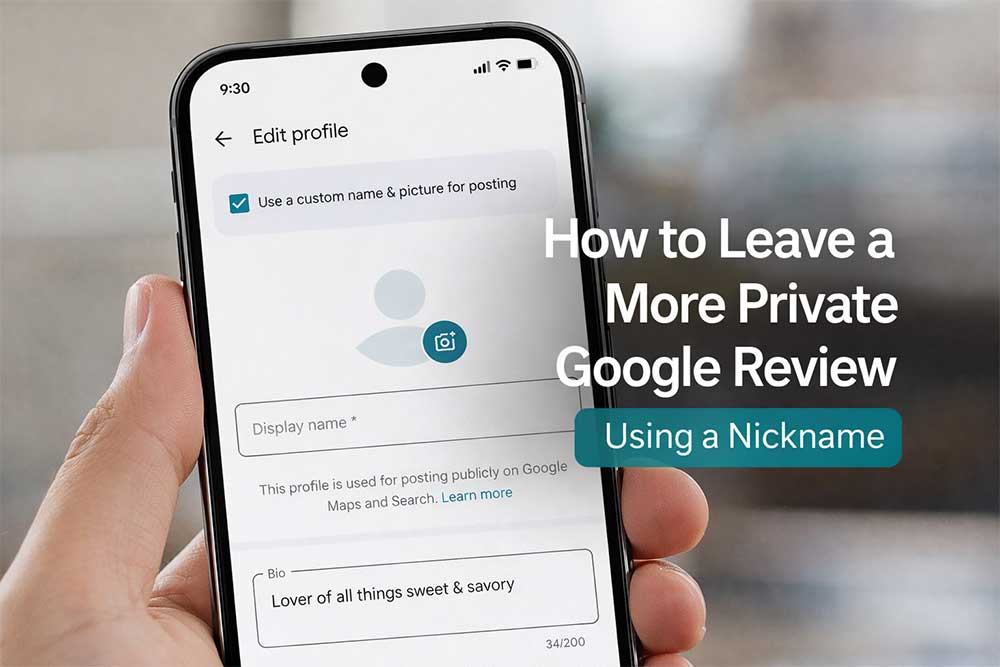
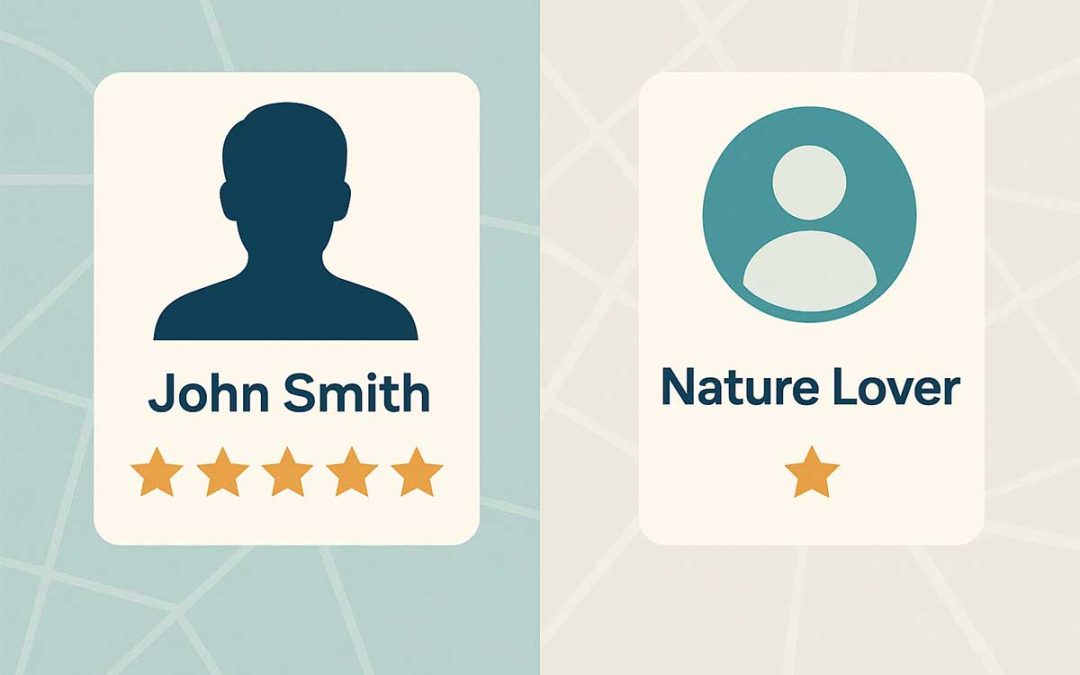
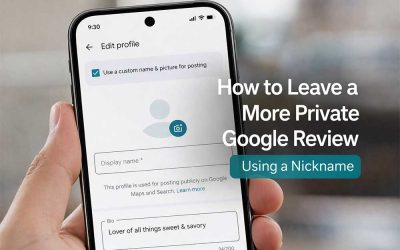
Start by establishing a consistent review request workflow within your admissions and discharge process. The most effective approach is to ask for reviews at the point of positive sentiment, typically at discharge or during alumni follow-up, rather than during active treatment. Provide patients and families with a simple, direct link to your Google review page. Be transparent that reviews are voluntary and remind reviewers that they should never feel pressured to share specific clinical details. For treatment centers, understanding anonymous Google reviews is also important, as Google’s nickname feature allows patients to share their experience without exposing their full identity, which can increase willingness to review.
Equally important is how you respond to reviews. Google tracks whether businesses respond, how quickly they respond, and the quality of those responses. Every review, positive or negative, deserves a reply. For positive reviews, thank the reviewer personally and reinforce specific aspects of their experience. For negative reviews, respond professionally and empathetically. Acknowledge the concern, invite the reviewer to contact your team offline to resolve the issue, and avoid disclosing any patient information in your response (this is both a HIPAA best practice and a trust signal). A consistent pattern of thoughtful, timely responses demonstrates to both Google and prospective patients that your center takes feedback seriously.
Beyond Google Reviews, monitor your broader online reputation. Google pulls review signals from third-party sites. For treatment centers, platforms like SAMHSA directories, Psychology Today, and specialized recovery review sites all contribute to your overall reputation profile. Ensure your center’s information is accurate on these platforms and address negative reviews wherever they appear.
4. Expect Temporary Ranking Drops After Optimization
This is the strategy that most treatment center marketers overlook, and it causes unnecessary panic. When you make significant changes to your Google Business Profile, such as updating your business name, changing categories, rewriting your description, or adding new service listings, Google temporarily re-evaluates your listing. During this re-evaluation period, your rankings may fluctuate or temporarily drop. This is normal and expected behavior.
Google treats major GBP edits as a signal that something about your business may have changed. It needs to re-verify your information, re-index your updated content, and recalculate your relevance and prominence scores. This re-evaluation typically lasts one to three weeks, though in some cases it can extend longer. During this window, you may see your position in the local map pack shift downward or become inconsistent across different searches.
The key is to avoid reactionary behavior. Do not panic and revert your changes after a few days of ranking drops. Do not make additional major edits while Google is still processing the first round, as this can extend the re-evaluation period. Instead, make your optimizations in a planned, coordinated batch. Update your categories, description, services, and photos all at once, then give Google two to four weeks to stabilize before assessing results. If your changes were genuine improvements, your rankings will not only recover but typically settle at a higher position than before.
For treatment centers, the timing of these optimizations matters. Avoid making major GBP changes during your highest-volume admissions periods if possible. Plan your optimization work during historically slower weeks so that any temporary ranking disruption has minimal impact on call volume. Document your baseline rankings before making changes so you have clear data to compare against once stabilization ends. Working with a team experienced in marketing for mental health centers can help you plan the timing and sequence of updates for minimal disruption.
How to Stay Ahead in 2026
Optimizing your Google Business Profile is not a one-time project. The centers that consistently outperform competitors in local search are the ones that treat GBP management as an ongoing operational habit, not a quarterly checklist.
Ongoing (every week or month): Respond to every new review within 24 to 48 hours. Add fresh photos of your facilities, staff, and programs on a regular rotation (with appropriate consent). Post GBP updates highlighting program offerings, community involvement, or educational content. Monitor your GBP insights data (search queries, direction requests, calls) and adjust based on what drives the most engagement. Keep the directions link strategy active across your admissions workflow and referral partner communications.
Quarterly checkpoints: Use these as moments to step back and audit the bigger picture. Verify that every service, category, insurance provider, phone number, and address still matches between your GBP and website. Check for new programs, certifications, or staff changes that need to be reflected. Research how competing centers in your market are optimizing their GBP listings and identify gaps. Audit your listings on third-party platforms like SAMHSA, Psychology Today, and treatment center directories.
When making major changes: Batch significant GBP edits (category changes, description rewrites, new service listings) and time them during lower-volume admissions periods when possible. Allow two to four weeks for Google to re-evaluate before assessing results. Document your baseline rankings before making changes so you have clear data to compare against. Align your GBP strategy with your broader addiction treatment marketing guide and overall digital marketing plan.
Staying ahead in treatment center local search requires consistency, not complexity. The centers that treat their Google Business Profile as a living asset are the ones that earn and hold top positions in the local map pack. If you are ready to strengthen your local visibility and turn Google Maps into a reliable admissions channel, reach out to our team to discuss a tailored local SEO strategy for your center.