
Video Marketing for Treatment Centers
Turn the articles you already publish into video
We turn your program’s articles into short, branded videos, then publish each one back into the article it came from and out to YouTube, Google Business Profile, Facebook and LinkedIn. Your content keeps doing its SEO work in text, and now it reaches the people who would rather watch than read. We handle every step from start to finish, so there is no work on your end.

Video built on your SEO and content, not beside it
Traditional video production has its place, but it asks a lot of a treatment center. It means hiring a production company, scheduling a filming day around clinical operations, and pulling owners and staff away from their work to prepare, appear on camera and review edits. It is expensive, it takes weeks, and the finished piece often lives on its own with no connection to the rest of the marketing plan.
Ours starts from the articles we already write for you. Each one was chosen against real search demand, written for the people looking for care, and checked for accuracy before it went live. That article becomes the script. The finished video is embedded back into the same article, then published across your YouTube channel, Google Business Profile and social pages.
The result is one piece of approved content working across every channel where families look for help, and none of the work lands on your team. We choose the article, write the script, produce the video and publish it everywhere it goes. Video adds no new clinical claims, no new review burden, and no filming at your facility.
Who we make video for
Video works best for programs that already have something worth saying in writing, which is most of them.
Addiction Treatment Centers
Families researching detox, residential or outpatient care want to understand what treatment actually looks like before they call. Short videos built from your existing articles answer those questions in a format that is easier to take in during a stressful search.
Mental Health and Behavioral Health Programs
Condition-focused articles on anxiety, depression, trauma and co-occurring disorders translate well into calm, illustrated explainers. They help someone recognize their own experience without putting a real person on screen.
Programs Already Publishing Content With Us
If we already write your articles, video is the next step for the same work. We choose topics from the content already performing or already planned, so every video is tied to a page, a search and a service line.
Programs With a Blog but No Video
Many programs have years of articles and nothing on YouTube or in their Google Business Profile video tab. That library is the raw material. We turn it into a steady run of videos without asking your staff to appear on camera.
What each video includes
Every video is produced as a complete package, ready for each channel it is going to, rather than one file you have to figure out what to do with.
For each article we turn into video, you get:
- a two to three minute video built from one of your articles
- a full vertical version for people watching on a phone
- a set of YouTube Shorts, each designed to send viewers on to the full video
- the video embedded in the article it came from
- publishing to your YouTube channel with a written title and description
- posts to your Google Business Profile, Facebook Page and LinkedIn company page
- a visual style developed for your program, with your brand colors, typography and logo throughout
- a narration voice chosen for your program and kept consistent across every video
One article becomes a video, a vertical cut, several Shorts and a round of social and Google Business Profile posts. That is weeks of fresh, on-brand material for channels most programs struggle to keep supplied.
Why video, and why YouTube
Video is the format people choose when they have a choice, and YouTube is where they go looking for it.
Video Holds Attention
Someone who would skim a long article will often watch two minutes of calm narration straight through. Video carries tone and warmth in a way text cannot, so a worried family gets a feel for your program, not just the facts about it.
Easier to Take In Under Stress
People researching treatment are often anxious, tired and on a phone. Watching and listening asks less of them than reading, which keeps them with your content long enough to understand what you offer and how to reach you.
YouTube Is a Search Engine
YouTube is widely considered the world’s second largest search engine, and it is owned by Google. People search it every day for answers about addiction, mental health and treatment. A channel built from your articles puts your program in those results too, not only in Google’s.
More Visibility in AI Overviews
An Ahrefs study of more than 3 million searches found YouTube is the most cited website in Google’s AI Overviews, with 22.9% of all citations. Video on YouTube, strong articles on your site and consistent posts across your social pages give AI search more places to find your program and more reasons to cite it.
Shorts Reach New People
Shorts are shown to viewers who were not looking for you yet. Each one is built to open a question and send them on to the full video, and from there to your site.
Every Channel Reinforces the Others
The same topic showing up in search results, on YouTube, in your Google Business Profile and on your social pages builds recognition. By the time someone calls, your program already feels familiar.
How one article becomes a video
We handle every step below from start to finish. Your team does not write, film, edit or post anything, and the video says only what your article already says.
Choose the Article
We pick from your published articles, or from topics already on your content calendar, based on what families are searching for and which service line needs support. Each topic is matched to a format that suits it, such as warning signs, a day inside treatment, or a question-and-answer explainer.
Script and Storyboard
The script is written from the article itself, so every point traces back to content that is already approved. Programs and therapies are named only if you have confirmed you offer them. The script and a scene-by-scene storyboard are finalized before production starts, which keeps revisions small.
Brand, Style and Voice
Every program gets its own visual style, developed to fit its brand and audience, along with its own colors, type and logo. We choose a narration voice that fits your program and keep the look and sound consistent across every video, so your channel feels like one organization rather than a collection of one-off projects.
Production and Quality Review
Every scene is reviewed for accuracy, tone, privacy and continuity. Characters have to look like the same person from the first scene to the last, down to their hair, clothes and shoes. We also check that no one on screen could be mistaken for a real patient, that on-screen text is correct, and that the audio is clean and even. Each video closes with a note that it is educational and not medical advice.
Publish Where the Article Lives
The finished video goes into the article it came from, onto your YouTube channel, and out to your Google Business Profile, Facebook Page and LinkedIn company page. If you do not have a YouTube channel yet, we can set one up for your program.
Shorts That Lead Back
Each video is cut into Shorts that deliberately stop before the full answer and point viewers to the complete video. That turns quick scrolling views into longer watching, and longer watching into visits to your site.
Behind every video
A two-minute video is the visible end of a lot of work. Here is one scene from Avery Lane’s video, followed from the article it came from to the finished frame.
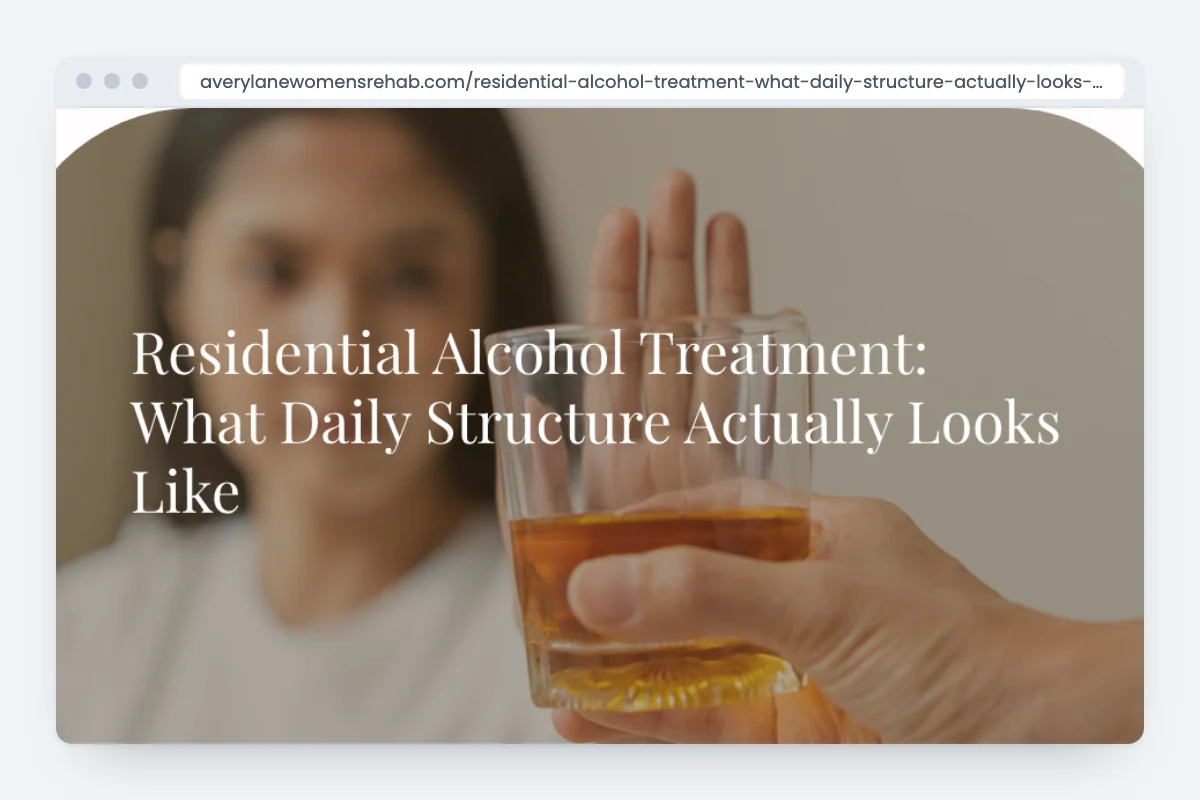
1. The article
Every video starts from an article already written for the program, built around what families are searching for.
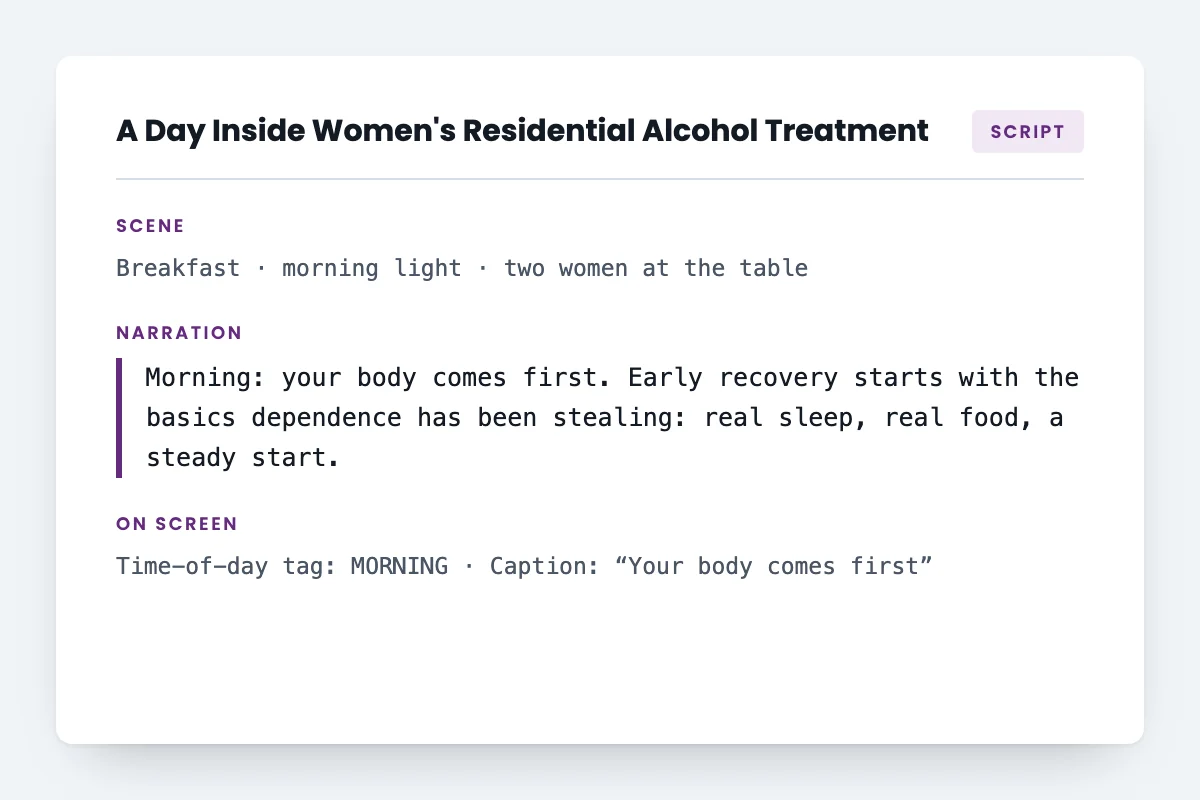
2. The script
The article is condensed into narration scene by scene, with on-screen text written alongside it. Nothing goes in that the article does not already say.
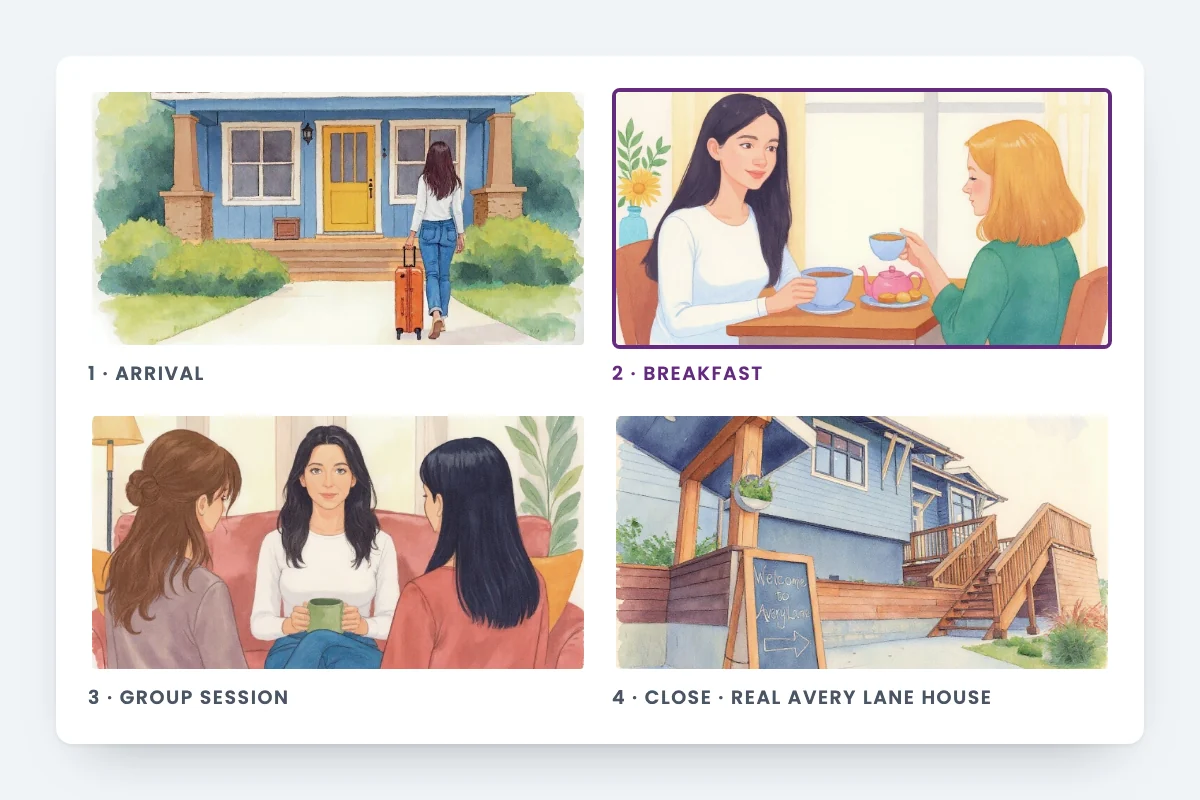
3. The storyboard
Every scene is planned and illustrated in the program’s style. Select scenes, handpicked to fit the story, are built from real photos of the program’s own houses and entryways and redrawn to match the video, so viewers see the actual place rather than a generic drawing. The same character carries through every scene, with the same face and hair, and clothes that change only when the story does, so the story reads as one person’s day rather than a series of unrelated pictures.
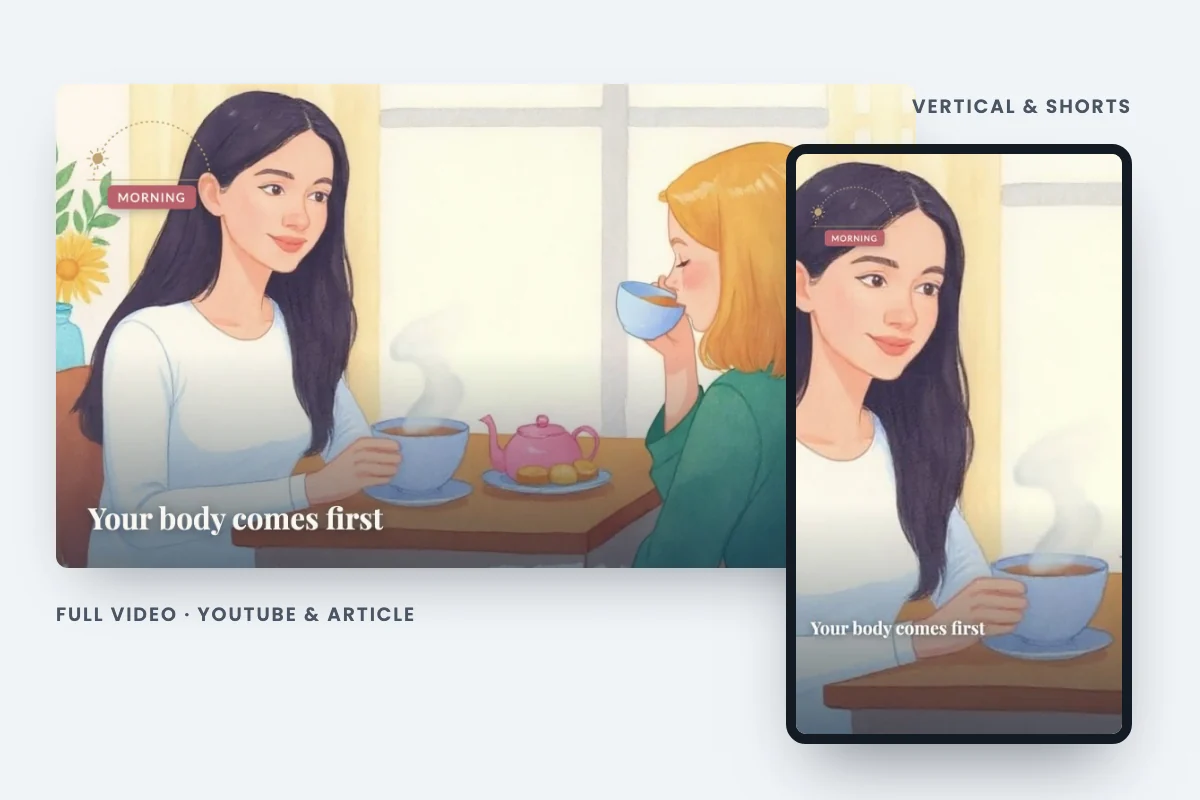
4. The finished video
Scenes are animated, narrated, scored and branded, then delivered as a full video, a vertical version and a set of Shorts.
Every video goes through multiple rounds of storyboard and edit review before it is published. That work is ours, not your team’s.
Our work: Avery Lane for Women
Avery Lane for Women is a residential mental health and addiction treatment program for women in Novato, California, and our first video client. Every video starts from an article on their site and is published back into it.

Avery Lane’s soft watercolor style was developed for their brand. Select scenes, like the house in the closing shot of A Day Inside, are drawn from real photos of Avery Lane’s homes, so the video shows the actual place. Your videos get a look of their own. New videos publish monthly on the Avery Lane for Women YouTube channel.
Why video in behavioral health needs different rules
Most video marketing advice assumes you can film customers, share testimonials and show results. In addiction treatment and mental health, every one of those carries privacy, compliance or trust risk.
Families are also more cautious here than almost anywhere else. A video that feels staged, dramatized or salesy does more harm than having no video at all.
So the standards are built into how every video is made, rather than checked at the end.
What we never put on screen
No Real or Implied Patients
Scenes are illustrated and never depict a real person, so no one on screen can be mistaken for someone in your care.
No Testimonials or Outcome Promises
Videos explain what treatment involves. They do not promise results or use endorsements that a family cannot verify.
No Claims Your Content Has Not Made
If a point is not in the article, it is not in the video. Nothing new reaches the public without having gone through your content review first.
Nothing Your Team Has to Do
No camera crew, no staff on camera, no filming inside your facility, and no editing or posting on your end. If you do have footage you want to use, such as a facility tour, we can edit that too.
Why programs choose ProDigital for video
Production companies make videos. We run the SEO and content programs that videos should come from, so every video is tied to a topic people are searching for, an article it strengthens, and channels already set up to carry it.
The craft shows in the details. Characters stay consistent from scene to scene, select scenes are drawn from your real facility, and every video holds one style from start to finish, which is what makes a story feel real rather than assembled.
That connection is the difference between a video that sits on a hard drive and one that keeps working. The article earns search visibility, the video makes it easier to take in, and the Shorts and posts bring new people to both.
We also work only in addiction treatment and behavioral health, so the privacy and compliance rules that matter in this field are part of how we make every video, not something your team has to police.
Frequently asked questions
What does our team need to do?
Nothing. We choose the article, write the script, produce the video, and publish it to your site, YouTube channel, Google Business Profile and social pages. Your team does not write, film, edit, review or post anything. The only thing we need is access to the channels we publish to, set up once at the start.
Do we need to film anything?
No. Every video is built from one of your articles using illustrated scenes, narration, on-screen text and licensed music. Nobody on your team has to appear on camera and nothing is filmed at your facility.
How does video connect to our SEO?
Video strengthens the content that is already doing SEO work. The article gets a video version for readers who would rather watch, your program shows up in YouTube search as well as Google, and your Google Business Profile and social pages get a steady supply of relevant posts. Video is not a ranking shortcut on its own. It works because it is tied to content built around real search demand.
Does video help us show up in AI Overviews?
It helps. Ahrefs research found YouTube is the website Google’s AI Overviews cite most often. No single piece of content guarantees a citation, but video on YouTube, paired with strong articles on your site and consistent posts across your social pages, gives AI search more ways to find your program and more signals that it is a trustworthy source.
Who writes the scripts?
We do, from your published article. The script condenses what the article already says and does not add new clinical claims, and it only names programs and therapies you have confirmed you offer.
Will real patients or staff appear in the videos?
No. Scenes are illustrated and never depict a real person, so no one on screen could be mistaken for a real patient. We do not use testimonials or promise outcomes.
How often do new videos come out?
A common starting point is two videos a month, each with its own vertical version and set of Shorts. That keeps your YouTube channel, Google Business Profile and social pages active week to week, and larger programs can go further.
Will our videos look like the Avery Lane examples?
Not unless that style suits you. Each program gets its own look and feel, developed around its brand, its audience and the tone it wants to set. Avery Lane’s watercolor style is one example, not a template.
Can the videos show our actual facility?
Yes. We handpick scenes that fit the story and build them from real photos of your houses, entryways and grounds, redrawn to match the look of the video. Families see the place they would actually be walking into, and no one on your staff or in your care has to be photographed.
Do we need a YouTube channel?
It helps, but you do not need one to start. If you do not have a channel, we can set one up for your program and brand it to match your site.
One Article, Every Channel
Ready to put your content in front of more people?
If your site already has articles worth reading, most of them are also worth watching. We handle every step of getting them there.

(5.0)
ProDigital is the real deal! In just a few weeks, their work has resulted in significant traffic and, most importantly, new customer contacts. ProDigital actually does the work that other SEO companies claim they do: they do the research, fine-tune their approach, study what happens, then do it all over again. Their service is worth every penny!
– Brent Bowen
CEO
(5.0)
We’ve been collaborating with the ProDigital team for years. From the very beginning, they had a deep understanding of the behavioral health space and addiction treatment providers. What stood out most was their willingness to patiently explain the strategy behind everything they do.
– David Larsen
PROGRAM ADMINISTRATOR
(5.0)
WOW! The team at ProDigital got us to the top of Google for all our targeted keywords through their SEO work and kept us there! They also manage our Google AdWords for addiction recovery and are getting us a positive ROI each and every month.
– Helen Miller
SENIOR VICE PRESIDENT OF MARKETING